
Enterprise Fintech Operation · Hospitality PMS

Used Where?
Resort/Hospitality billing operations
Who Uses It?
Front office and accounts staff
Which Platform?
Web Application
Scope
End to End Feature Revamp
Status
Shipped in 2025
Output
Reduced Enterprise Billing Setup Effort by 70%
What to know before reading further
Before exploring the solution, here are four key hospitality concepts that will make the rest of this case study easier to understand.
Post Types
Expense categories such as Room, Restaurant, Spa, Laundry, Parking, etc.
Routing
A payment rule that decides who pays for each expense.
Folio
A guest's personal bill where all their charges are collected during their stay.
Master Folio
The company's shared bill that collects expenses for an entire group.
Current Challenges
Hospitality systems route charges across guests, companies and properties. Master Folio Routing decides how every charge flows
01
Group bookings across multiple rooms and 10 to 300 reservations.
02
Department-level post type allocations and 3000+ charges
03
Corporate billing accounts with one central invoicing
04
Real-time routing decisions at point of sale
For small properties It is manageable, But at large scale, configuration effort compounds quickly.
This feature exists because large scale hospitality billing is rarely one guest, one bill and getting the routing wrong means revenue leakage or very annoyed clients.
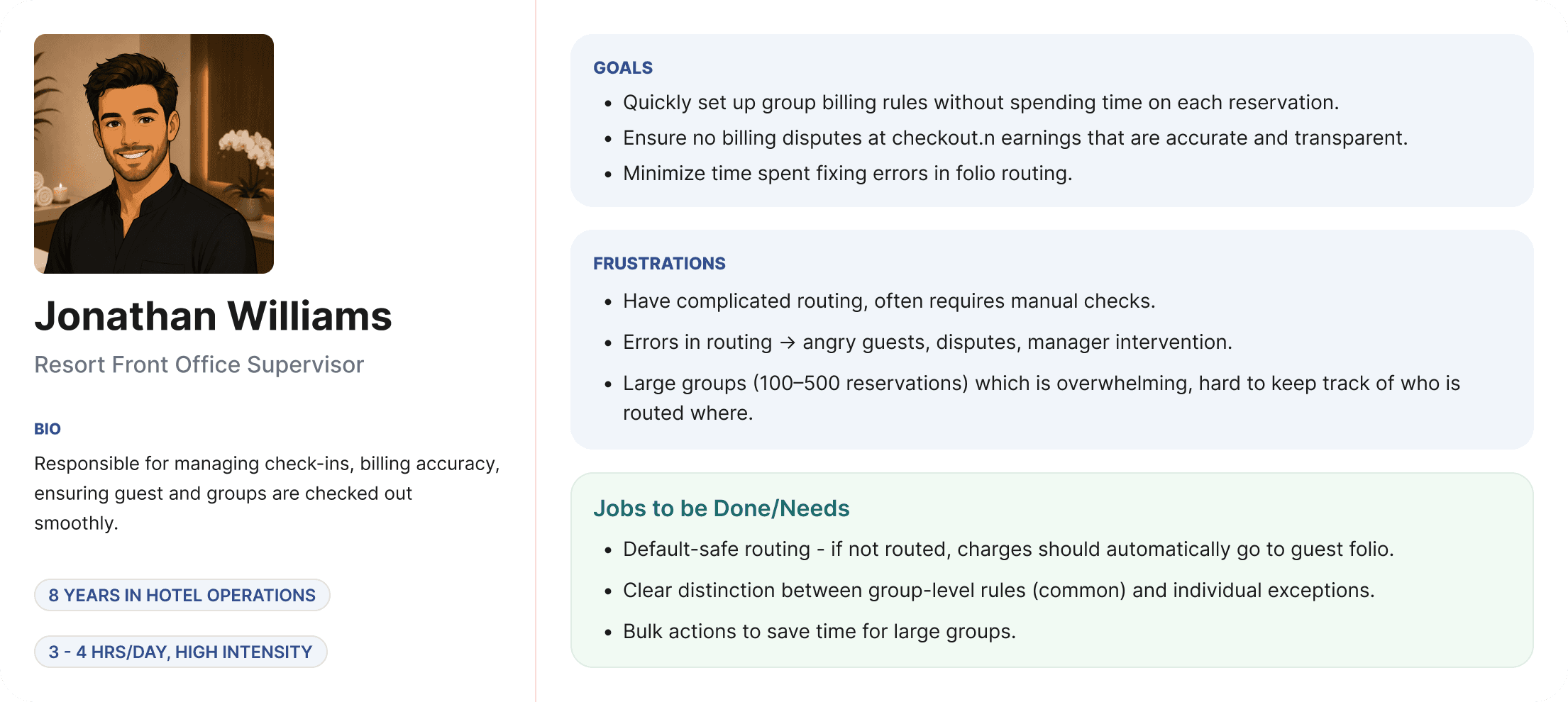
User Interview
Feature Impact
Without Routing
Fragmented billing creates confusion and overhead
Each guest receives a separate bill for room, food and every extra expenses.
Company receives multiple invoices, making reimbursement tedious.
Guests are often confused by which charges belong to them vs the company.
With Master Folio Routing
Unified, automated charge flow for all stakeholders
Company’s profile is linked to a central group master folio.
Selected charges for all guests are automatically routed to the Company/master folio.
Individual spends are routed to respective guest's personal billing/folio.
The Real Problem
Discovery findings
Currently The system optimized for flexibility, not scalability. This created a series of downstream friction
Repetitive Manual configuration for each property
Increased data verification overload and time consuming process
Elevated risk of revenue misrouting due to process overload
Reframing the Challenge
Old Question
"How do we simplify this interface?"
Reframed CHALLENGE
“How might we reduce repetitive rule creation while preserving enterprise level configurability?”
This reframe shifted the entire solution space from UI polish to workflow architecture.

Design Iterations
Iteration 01 - Rejected
3-Column Simultaneous Layout
Reservations, post types, and configuration side by side eliminating tab-switching by surfacing everything at once.
Engineering feedback
Processing this much data simultaneously introduced performance and complexity risks.
Stakeholder feedback
Has higher chance of accidental misconfiguration, since financial errors are critical and dealbreaker for business.
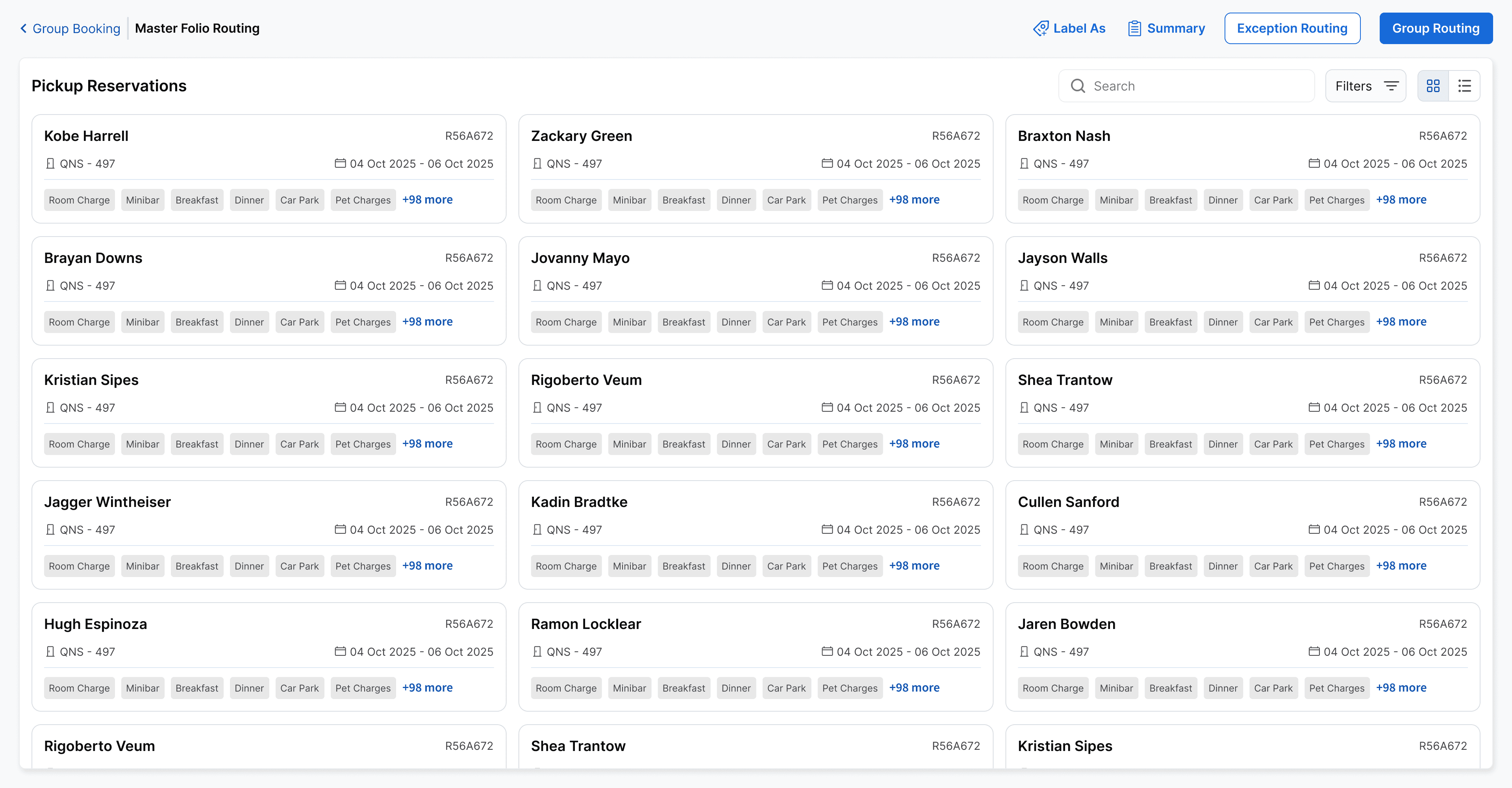

After number of iterations, enhancements and discussion, the final solution arrived.
01
Logic Grouping
Related context are grouped hierarchically, advanced options surface contextually, prioritizing high-frequency actions.
02
Pattern-based templates
Introduced reusable configuration templates aligned with common billing scenarios.
Impact: 20–60% reduction in configuration steps depending on scale.
03
Override Controls
Free-form editing replaced with select and override removing accidental misconfiguration at the source.
Together they preserved routing depth while removing the repetitive structural effort that was burning out operations teams.


Tradeoffs & Constraints
Over-simplification would restrict advanced scenarios. Excessive configurability increases the risk of financial errors.