
Workflow Automation · Logistics & Transportation

Used Where?
Logistics/Transportation quoting tool
Who Uses It?
Fleet owners & transport operators
Which Platform?
Web/Mobile Application
Scope
End to End Feature Discovery
Status
Shipped in 2024
Output
From 25 Minutes of Manual Pricing to a 2.5 minutes Structured Workflow
Research
Every quote required manually reconciling route distance, vehicle type, fuel variation, toll estimates and margin adjustments across multiple sources before a single number could be shared with the shipper.
An initiative to make transport quotation generation 10× faster for Indian fleet owners who operated in a world where every quote required cross-checking multiple sources simultaneously.
Web Search
WhatsApp History
Spreadsheets
Personal Memory
25 min
Average time per quotation by manually
~20%
Potential business lost due to slow response
The Problem We Noticed
“How much will it cost to send goods from Chennai to Hyderabad?”
But answering that isn't simple.
Fleet owners manually calculated costs from memory, checking maps for distance, news apps for diesel rates, and calling contacts for toll estimates. Rough guesses led to inconsistent pricing or loss-making quotes.
🗺️ Distance Lookup
Google Maps opened, route checked, Kilometers noted manually.
⛽ Diesel Rate
News app opened, rate checked, calculation done by calculator.
🛣️ Toll Estimates
Guessed or recalled from previous trips. Often outdated
📱 Final Price
Typed and quoted by whatsapp
What we heard from fleet owners
By the time I calculate, another lorry already took the load.
Fleet Owner
"
Diesel price changes, my rate becomes loss. Tracking that daily becomes very challenging.
Fleet Owner
"
I calculate on calculator, check Google Maps for distance, then send number on WhatsApp. No proper system.
Transport Operator
"
What surprised us
Speed matters more than perfection. They'd rather have a 90% accurate quote now than a perfect one later.
Shaping the Strategy
How might we convert manual pricing intuition into a structured, repeatable system without removing dispatcher control?
To achieve that, we anchored our strategy on three principles:
⚡Minimal Input, Maximum Output
Capture only what's truly necessary. Every additional field adds friction and slows the quote.
🧠 Smart Defaults
The system does the heavy lifting, auto-fetching mileage, toll rates and live fuel prices.
🚀 Action-First Design
The goal isn't just to calculate, it's to share instantly. The quote must be shareable in one tap.
Wireframe Explorations
I mapped the mental model of how a quote actually happens in real life.



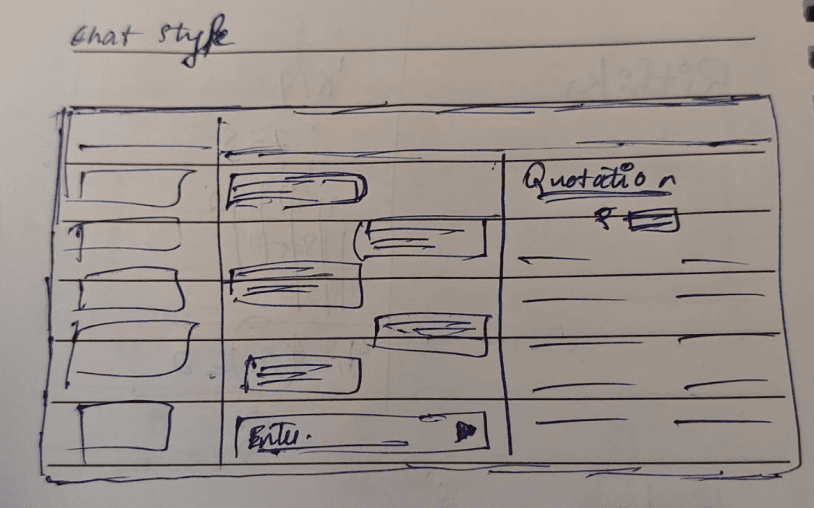
Too Slow

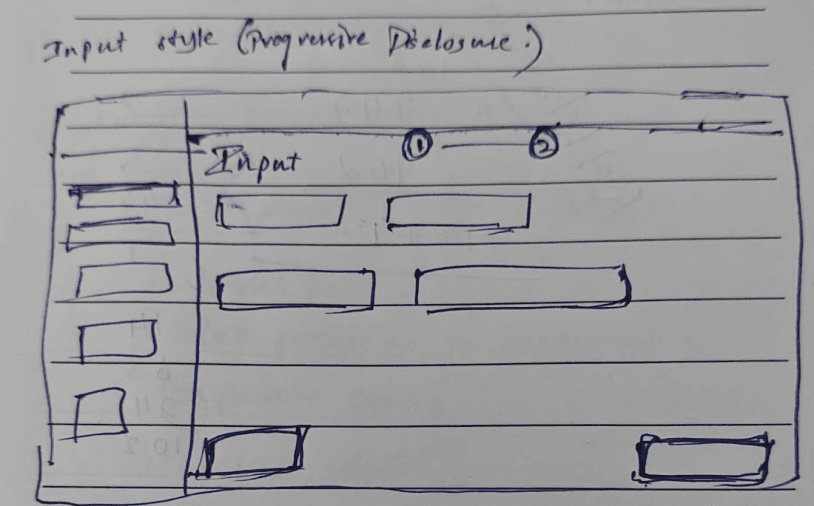
✓ Chosen

Design Iterations
Iteration 01
4 Inputs + Quotation
Structured the quotation flow around standardized inputs. 4 fields to create a quote. Integrated automated pricing logic directly into the workflow with chip-based vehicle selection.
Users had full freedom to add additional charges as needed.
User Feedback
For a single quotation, users need to calculate for up to 10 trucks based on cargo type.
For the calculation they use mental model like fixed and variable costs to tweak the margin.
They would check the map routes for quickest way.
Used progressive disclosure


4 Input fields for creating quotation.
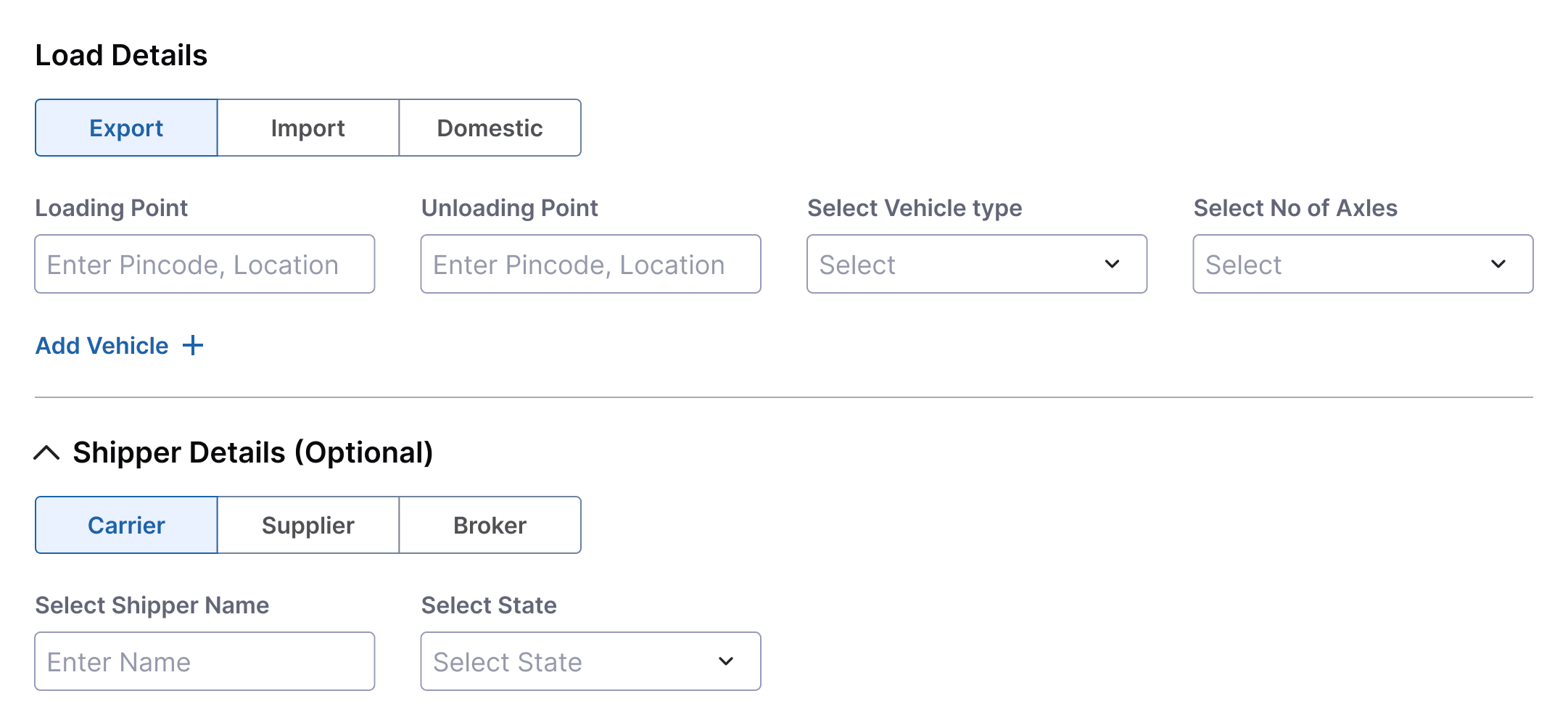
Auto-calculated everything else behind the scenes (distance, fuel, toll, bata). Control and freedom for adding any other charges.
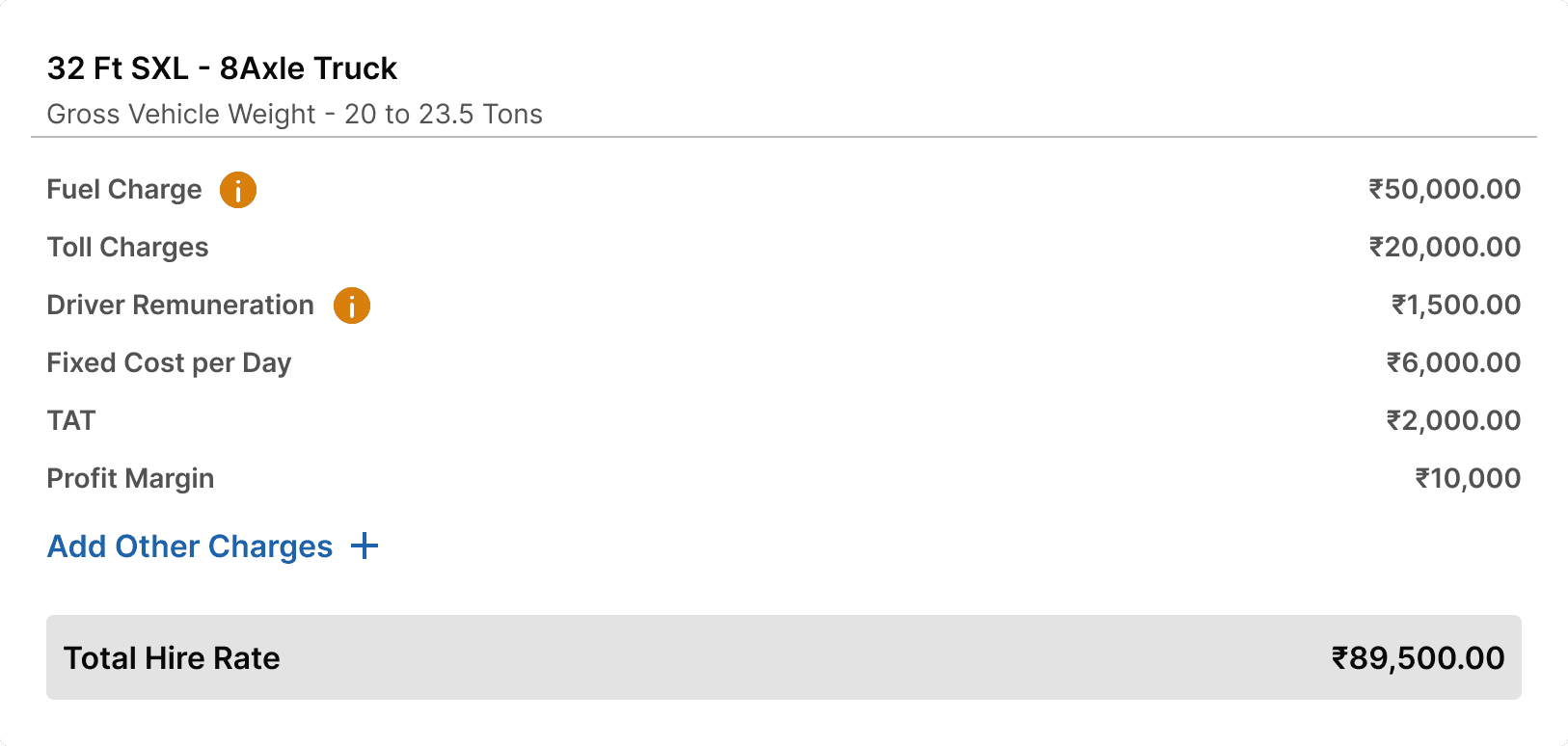
Iteration 02
Fixing Layout for Better Scan.
Based on the feedback, the necessary data has been included.
Design Observation
Explored multiple layouts and patterns for this rapid design decision making task. then delivered the final design.
This design has some issues, the trucks displayed as chips which works for a fewer but becomes pain point when handling multiple trucks (up to 10 or more).
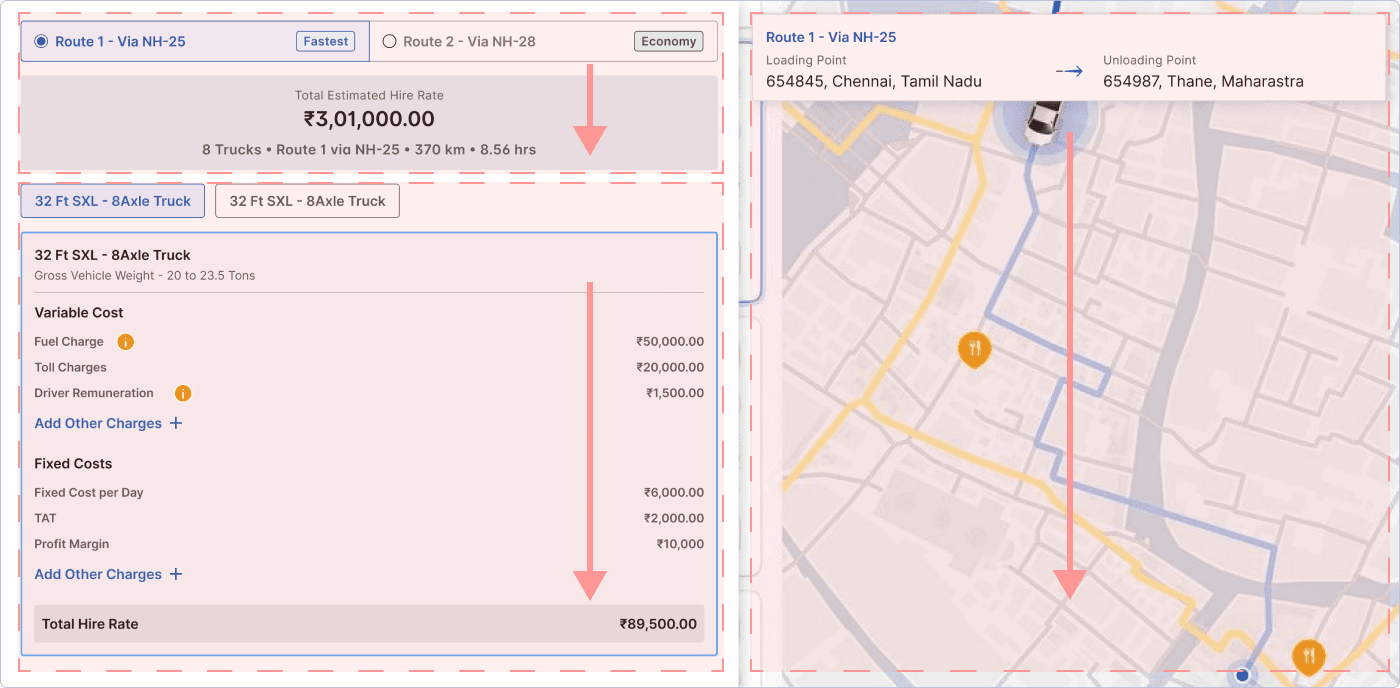
The list selector is suitable for displaying multiple trucks, but considering other elements the eye recognition pattern seems chaotic.
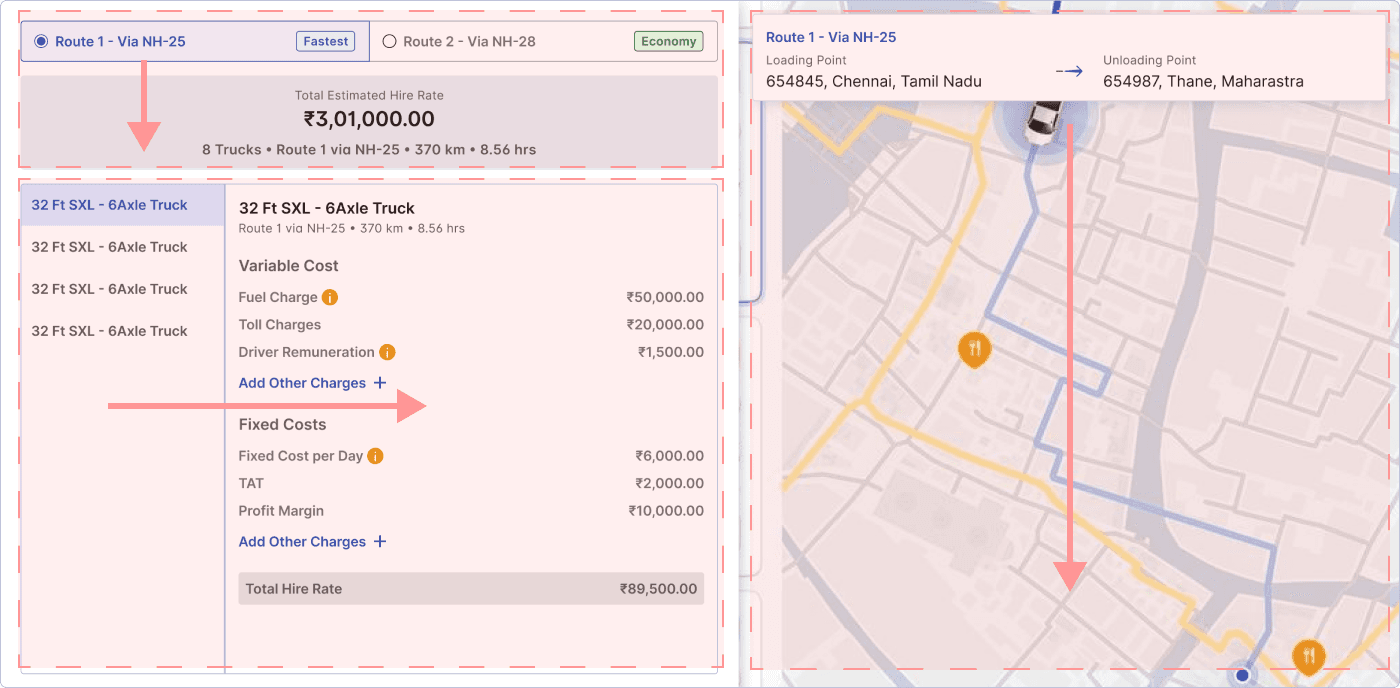
Final Design - Shipped
Pricing Flexibility Without Repetitive Calculation
The final solution preserved full pricing flexibility while eliminating every repetitive calculation. Progressive disclosure surfaces only what's needed at each step. All values are auto-calculated behind the scenes.
Users retain freedom to tweak margins, add custom charges and compare across truck types.
Final Outcome
Average quote time reduced from 25 minutes → 60 seconds. Native WhatsApp sharing and PDF export built in. Save-as-template for recurring routes.


Before
25 Minutes
per quotation, manually calculated across multiple sources with rough guesses and no records
After
10×
Faster quote creation speed
+20%
Potential business recovered from slow response
2.5 Minutes
Structured, accurate, shareable generated automatically with live pricing data.